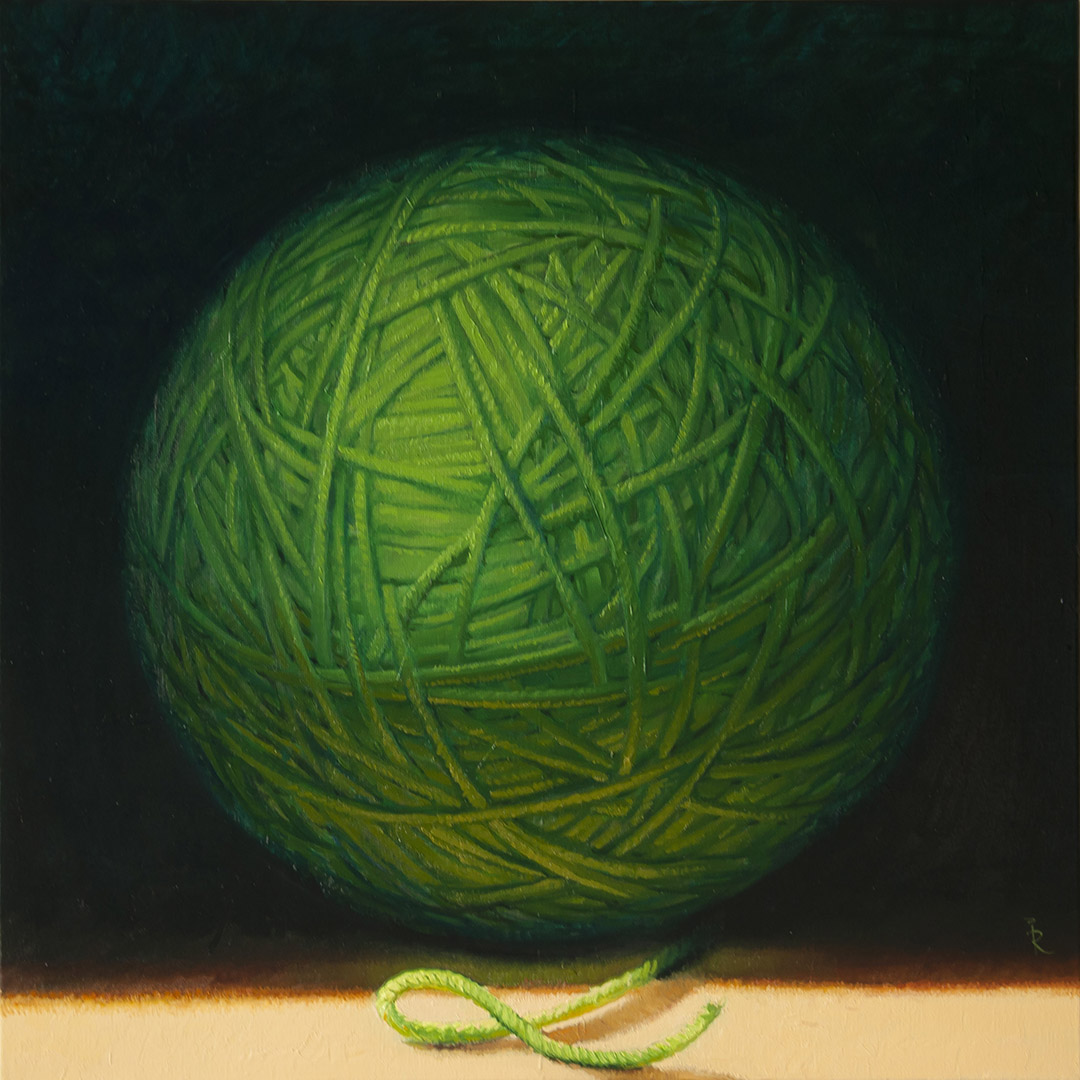
Diatonic garden
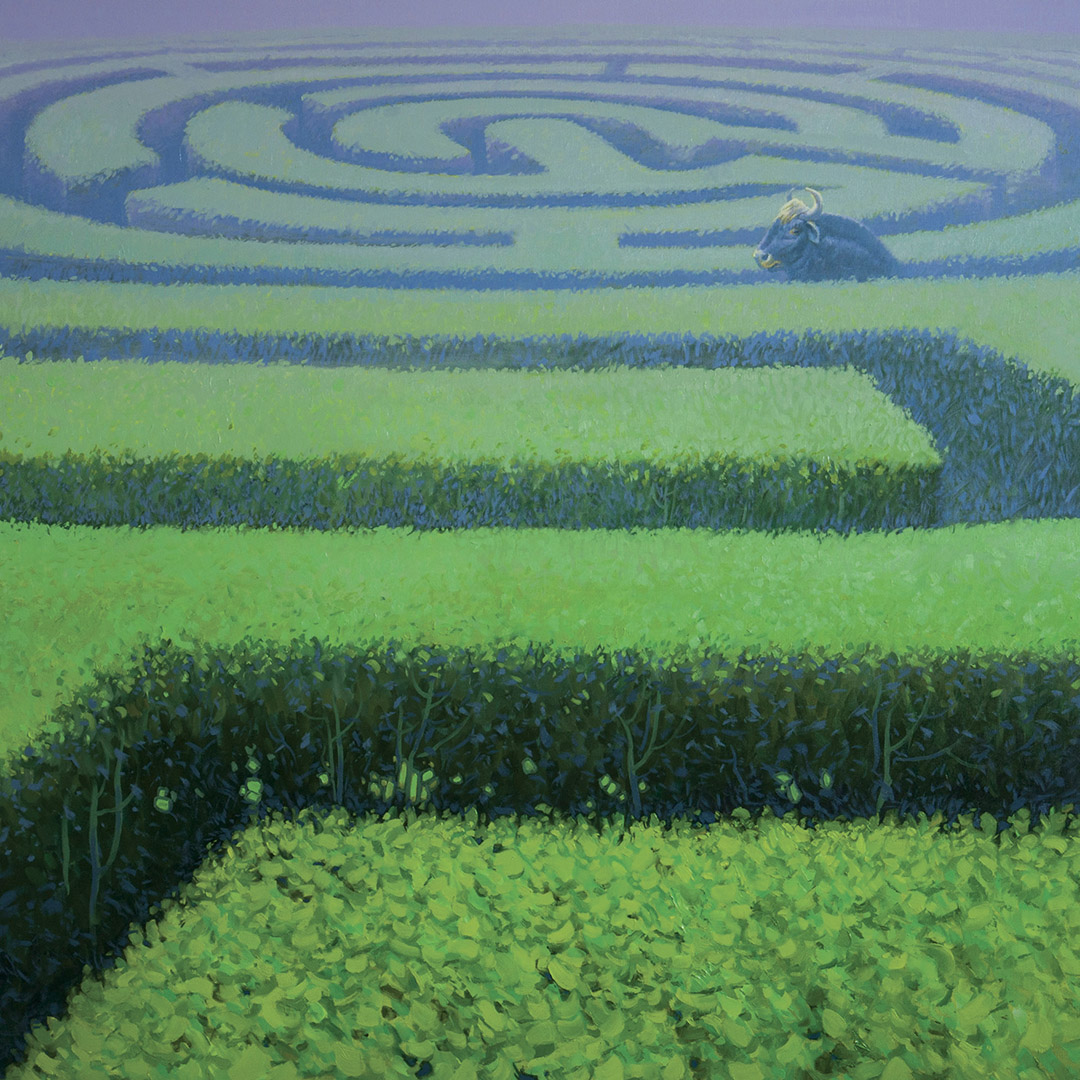
Among many other interpretations of labyrinth, general concepts that are perhaps the nearest to us are the ideas of the human way of life and the road to knowledge. Pattern alike bending path evokes the lifelong dance idea, reminding us of its turns, ups, and downs. Getting here, one can meet the terrible Minotaur, but may also become him. It is absolutely unknown, whether a way out can be found. What if these intertwinings actually are the one's abode? It is sad and wonderful at the same time, that everyone has one's own maze and monster, whom you have to overcome. There is no one except for the wanderer himself to make a route. Barcode resembling the Labyrinth is our own, this is where we err and triumph. And here we see its terrifying master, Minotaur. He's a symbol rather than a monster in literal sense. He is wretched, but still dangerous because of loneliness. He is a mirror. Needless to say, defeating an inner monster is the biggest difficulty. Unexpected infinite turns are only a way of perfection. Wouldn't we all like to believe in it? As is often the case, a helping hand for the daring one belongs to a beautiful companion. This is what a fairly concise central part, "Ariadne's Thread", describes. Our hero hasn't stepped yet on the knowledge path, so thread seems encouragingly long. But what's ahead... Well, people always hope for the best, so infinite discoveries, victories and love are certainly awaiting him.
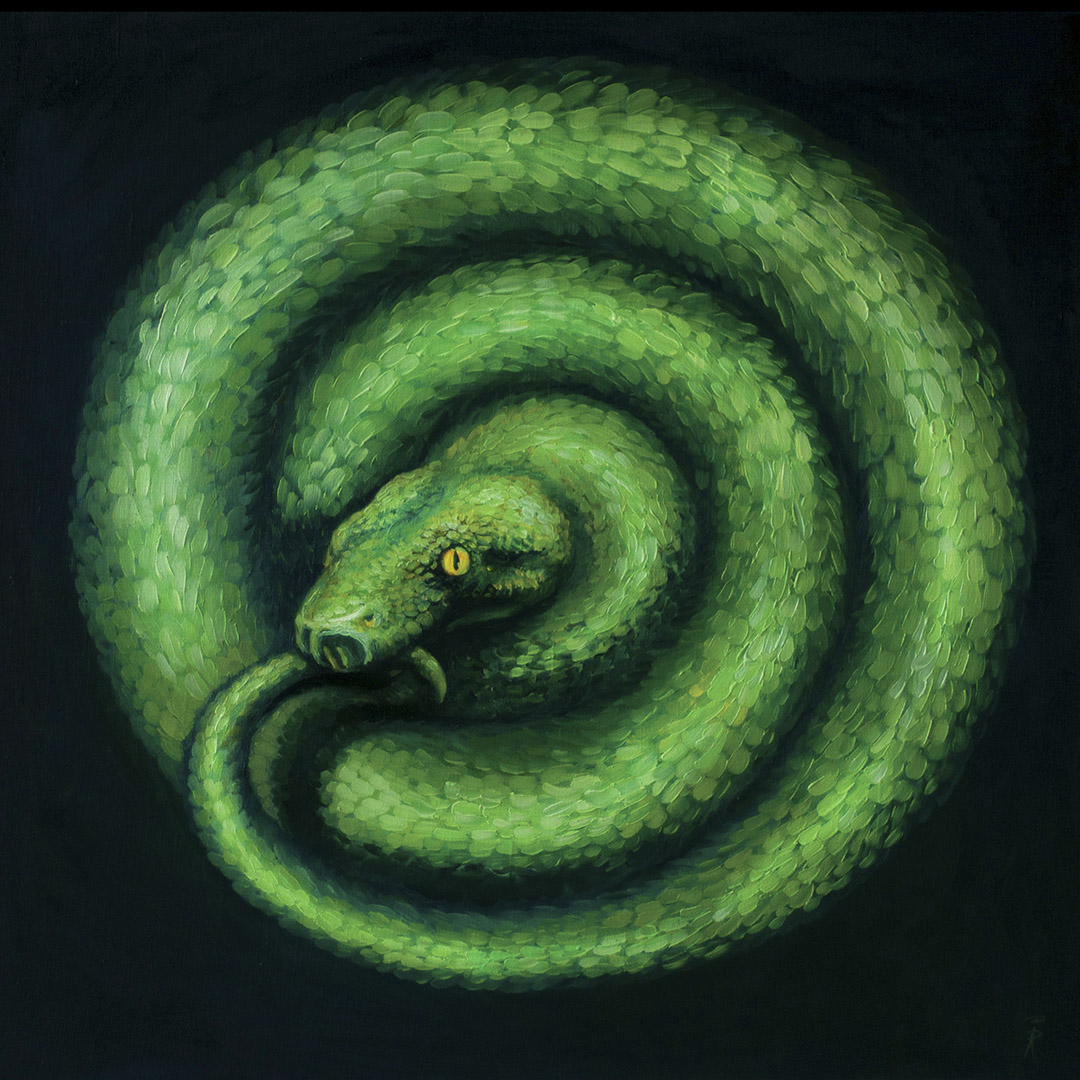
Ouroboros is a symbol of infinity and eternal rebirth. A mysterious, slightly sinister symbol, constantly tried on by humanity, while circling through the history's spiral. Serpent's cyclical self-destruction gives way to resurgence in new spiritual heights. This ancient symbol existed in most of the world nations, and has been a prototype of Chinese yin and yang. We find Ouroboros to be a good reason for optimism. After all, no matter how long dark times last, light will surely set in!
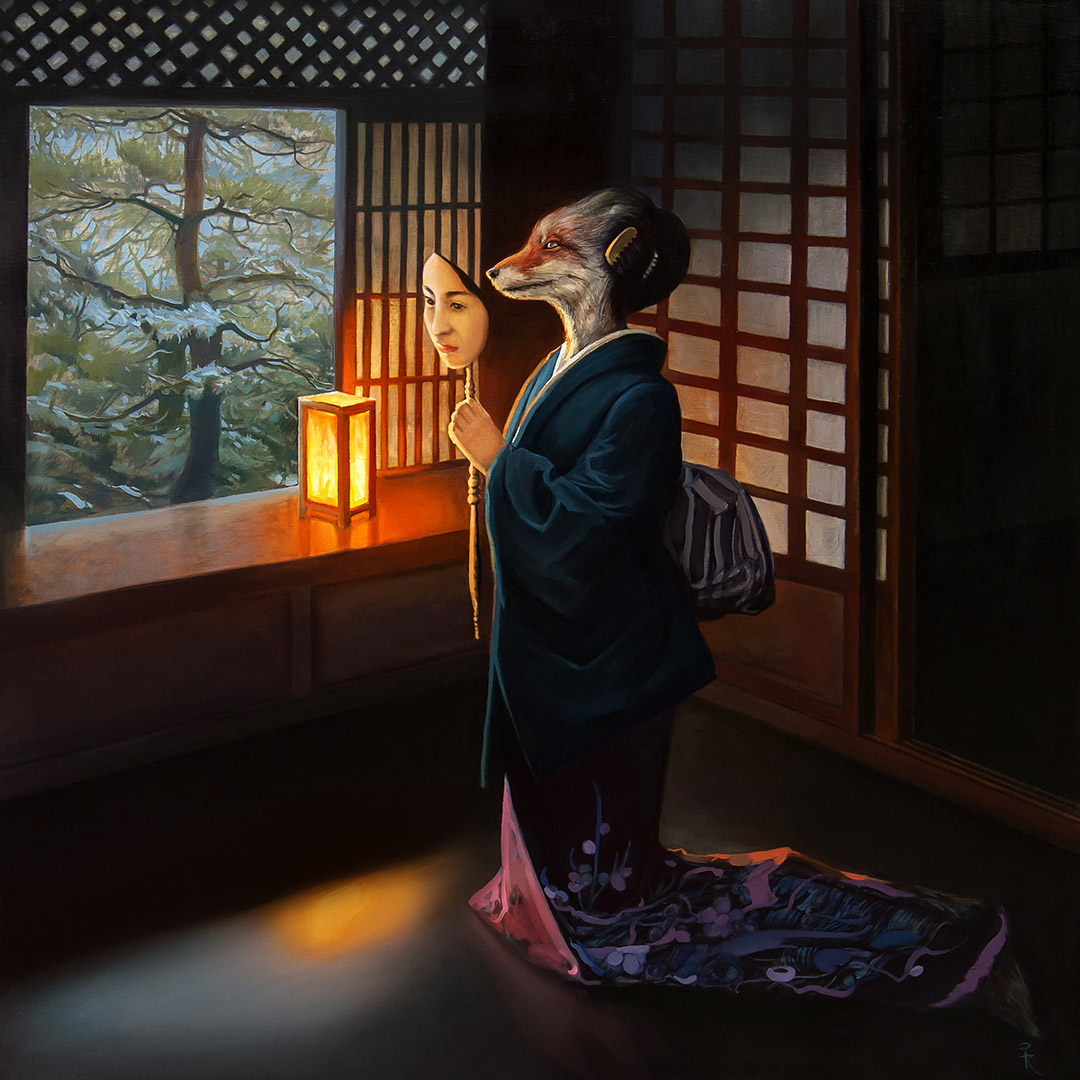
The so-called obsession with a fox (kitsune-tsuki) is quite frequent in Japan. It's a form of nervous disorder or mania, when a person believes to be a cunning fox. After entering a body through the chest, between shoulder and arm, or more often through the spot between nail and flesh, fox lives its own life, apart from human. This leads to the consciousness duality. Japanese believe that fox deals with human world not accidentally, but always for its own benefits. We're showing a woman, who feels one certain man's importance, she is ready to pretend to be a human for him, while in fact being a fox. She is waiting for a chance to put a spell on someone whom she liked, she brews a potion, she can wait forever.
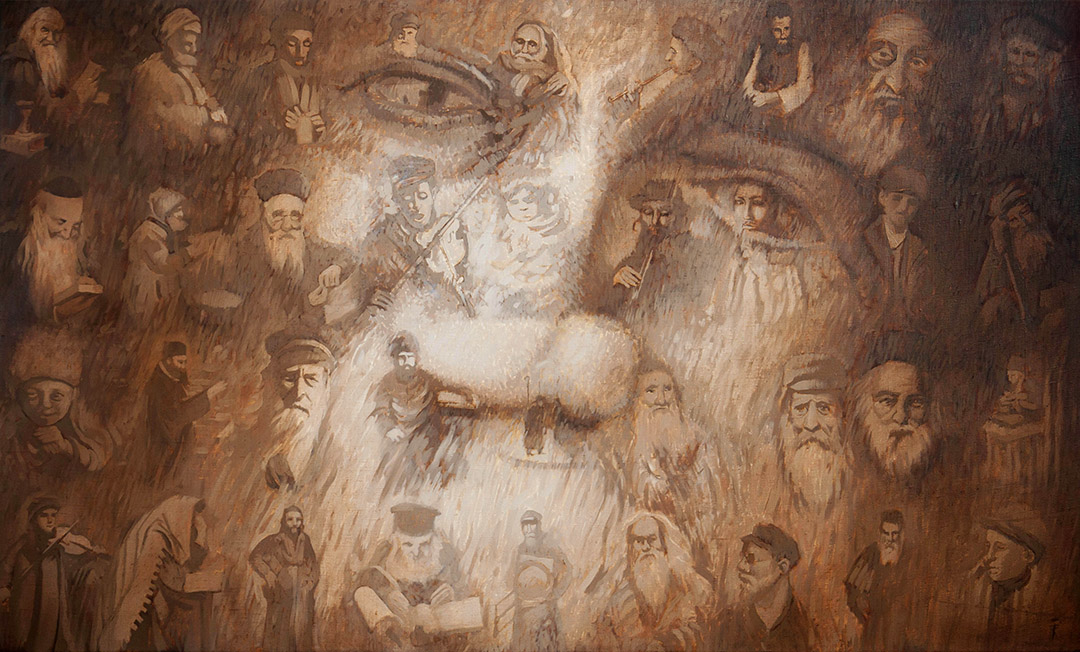
There are, and there have always been the thirty-six righteous people, whose purpose is to spiritually justify our world's existence in front of God. They are Lamed Vavniks. They are very poor, humble and quiet. None of them is aware neither of mission, nor of companions on this way. Once a man suddenly learns that he is a Lamed Vavnik, he immediately dies, and another man takes his place, no matter where he is and how old he is. This thrilling Jewish mystical tradition legend is impossible to prove. Nevertheless, it's pleasant to believe in it, because it gives hope for the world salvation. Who shoulders the heavy burden - or the gift - of mankind salvation? It could be your neighbour, your enemy, finally, it could be you. Whereas there are thirty-six Lamed Vavniks, there is always only one Sufi Qutb for the whole world. For this reason, Qutb was often called "the time pole". He has an inmost knowledge and represents a mediator between people and God. It seems to us, that whatever the mythical number of righteous people is, belief in their presence will not allow you to give up and despair.
Ignorance seems to be the decisive moment in Lamed Vavniks' life. They don't know who they are, but if for some reason the number of thirty-six changes, the world will disappear. We showed the "ark" of righteous, who hold the world. Thus we would like to hint that this is just a picture, and nobody knows what they actually are, and the premonition of world salvation hid in each person nearby, should never leave us.
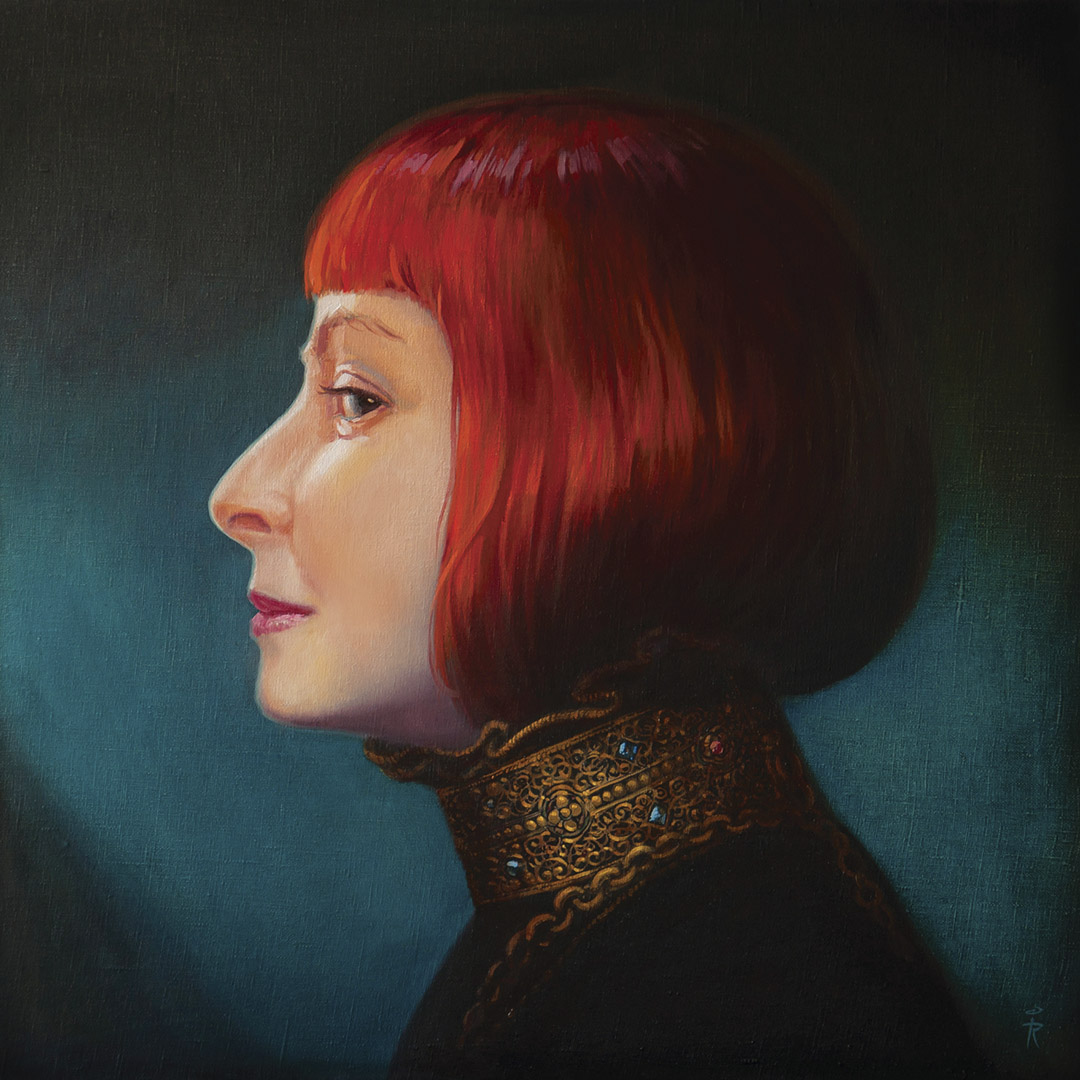
This is a very complicated character, who has been ranked as a bloody monster and vampire by history and contemporaries. Today, researchers agree: her main fault were Calvinist faith and keen mind. As a girl, Elizabeth got a good education, and probably was smart and capable of sciences. Together with her husband from a family no less wealthy than her own, Bathory settled in Chachtice Castle. When the husband took a post of Hungarian troops commander in the war against the Turks, she was charged to defeat estates, located on the road to Vienna. Threat was significant, but even in this complex situation Elizabeth had advocated for bereaved women a few times, including those whose husbands were captured by the Turks, and those whose daughters were raped. After her husband's death, Bathory remained the sole owner of a vast fortune, and a Lutheran priest accused her of atrocities and massacres. It entailed a long trial, through which countess was convicted and imprisoned in solitary confinement, where she died four years later. Slanders, which she had never accepted, were most likely fabricated. Elizabeth was a victim of her time and church and authorities' intrigues.
A well-educated, strong and rich woman, who had no right to be a full mistress of her husband's legacy after his death, hindered too many people. This figure necessarily had to be removed from the chessboard. Most likely, this character does not deserve its place in the serial killers' and other tormentors' panopticon. Tragic fate of our Bathory - a woman who could not defend herself in rigidly patriarchal society, hid behind the heap of intrigues, dirt, pain, war, betrayal, greed, politics and ignorant surrounding.
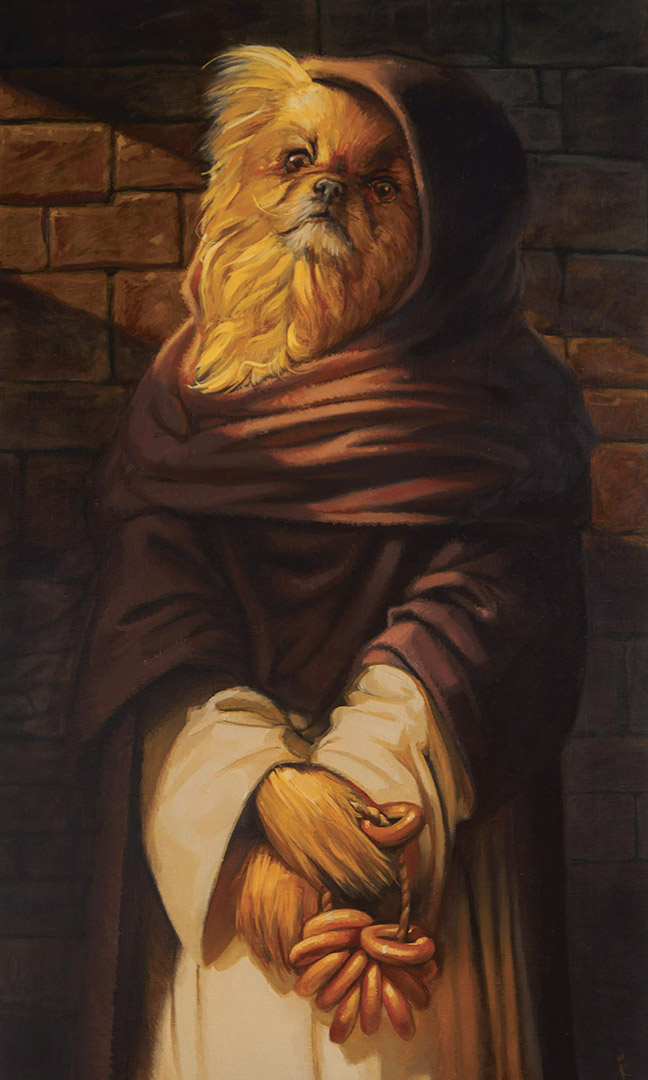
Cynocephaly, or Dogheads are fictional people with dog, wolf, jackal or hyena heads. References to them can be found in Indian, Persian, Egyptian, Chinese and Zulu texts. Fields marked as "cynocephaly populated", existed in medieval maps. According to the testimony, although they had dog's heads, the rest of the body was completely humanoid. They used tools and weapons, and wore clothes. It enabled the medieval theologians to claim that Cynocephaly had souls, because shame is a consequence of God-given soul. Anthropomorphic canids seem to never leave man indifferent, for example, the stories of Anubis with dog's head, of lycanthropy, of St. Christopher. There is even an extraordinary Transcarpathian tale about three brothers, who were captured by horrendous Doghead.
This is the most pleasant work for us, since it is directly related to childhood experiences and kind apocryphal story about St. Christopher, which can cause only a smile. The prototype of our Doghead is one of the family members. It is our unusual and clever dog, who has invented many habits, games and its own rituals. One of her fetishes is a bagel. It collects bagels by size and type, it can even count its "treasures". Masya the dog is so humane that we decided to include it among the personalities of our garden.
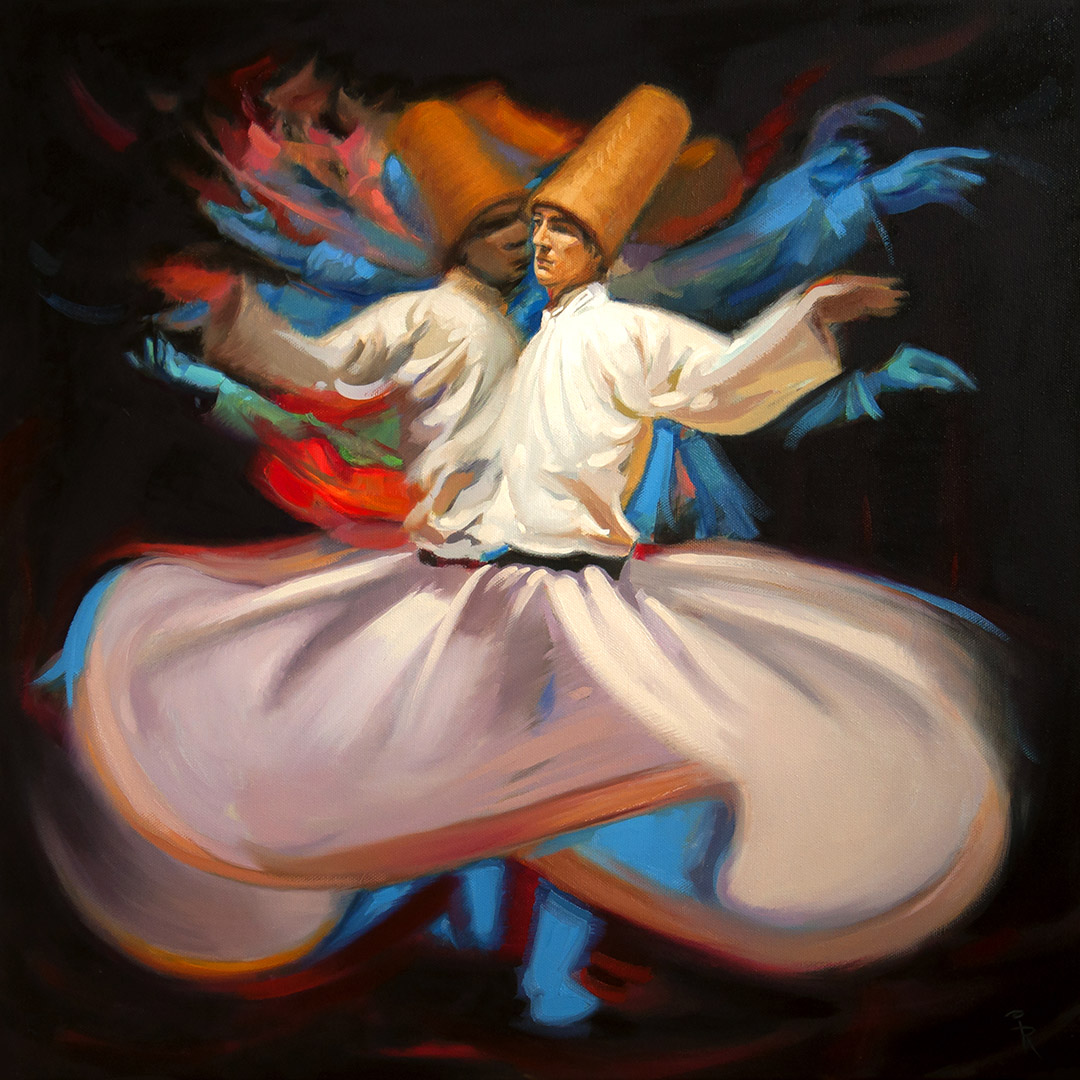
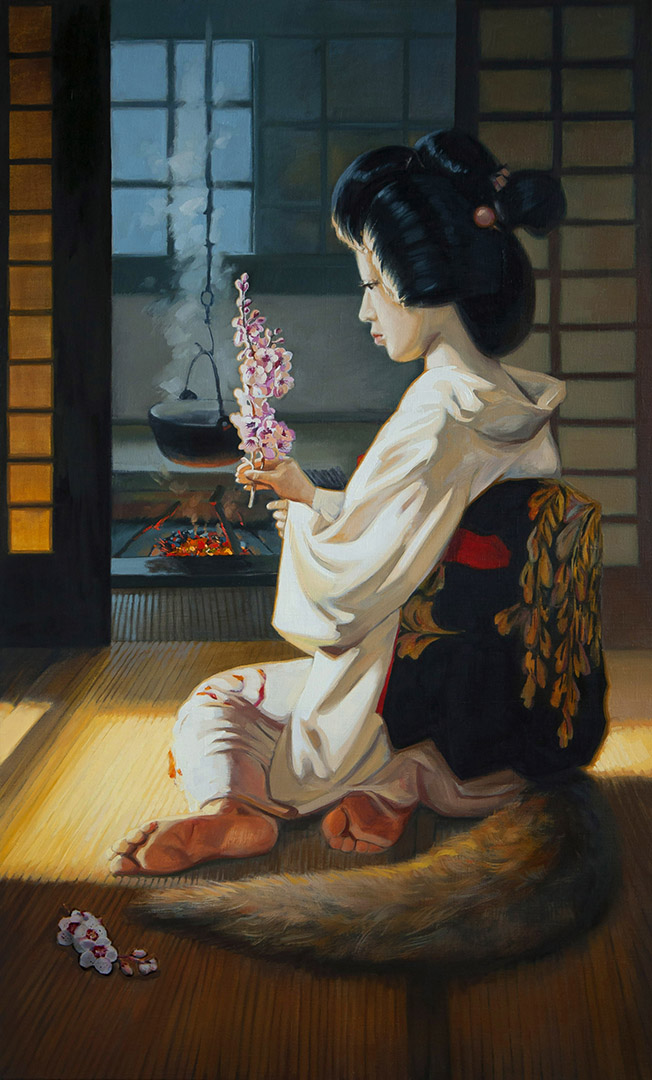
In Japan "showing your tail" means revealing one's true character. Contrary to popular image of sly shapeshifting fox, trying to cheat by all means and sometimes even to kill its victim, we want to show that kitsune is not a monster. Even the classic legends say that kitsune has a soul, encased in a pearl, which kitsune always carries with it - in the mouth, as a necklace or a bracelet. What if we look from a different angle: the fox did not invite a human into a house, which later can't be found. It decided to cross an unknown home doorstep, placing its fate in stranger's hands. Kitsune is a shapeshifter, and therefore it's not what it seems. Who wore a mask - the wild forest beast, or the loving hearth and home wife? They say, you can always see kitsune's true face in the water reflection.
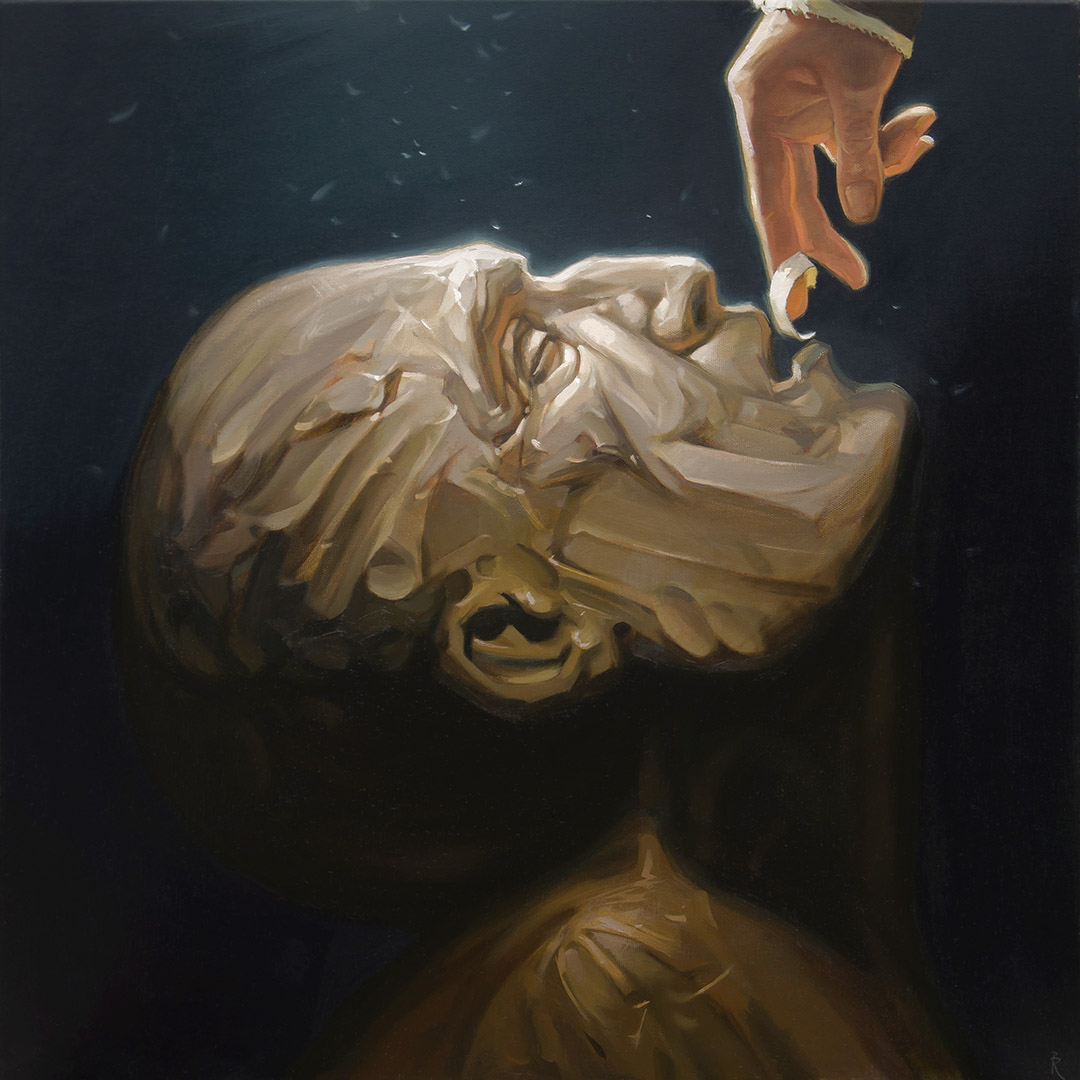
Diptych is a free author's interpretation of a complex character's life and the fate, devoid of classical subtext. Golem from legends was not a man, a dull vegetative existence barely smouldered in him. We are more up to understanding him as an allusion of Adam. The one, sculpted by the Man, breathing a new life into his own image and likeness. Clay offspring expects from its creator the notes with revitalization words and tasks, but at the same time he's not too humble to give up life, full of meaning.
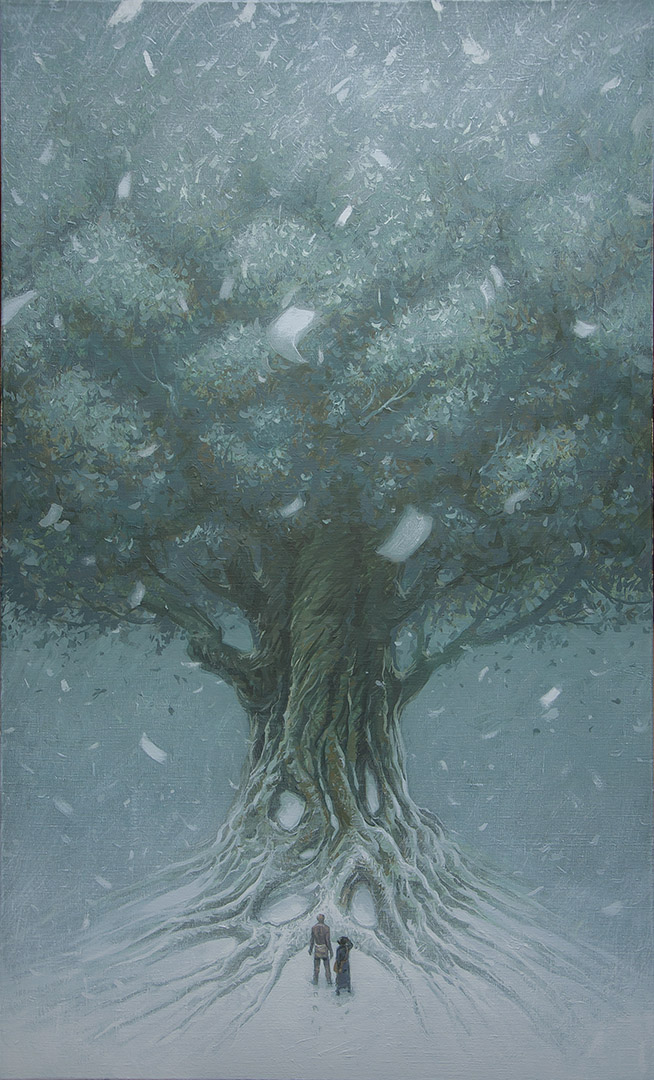
Our non-classical Golem infinitely takes the notes from God and tries to live according to His purposes and plans. However, he has a right to declare his own independence, if he sees a tree of knowledge, the source of wisdom and significance. To achieve this, it is necessary to go a long way in search of one's destiny. Confusion? Freedom? Creator brings his offspring to the Tree of Destiny, where instead of leaves there is a myriad of notes, like the one that revived the statue. What does Golem feel? Which purpose will he choose? What does the creator feel?
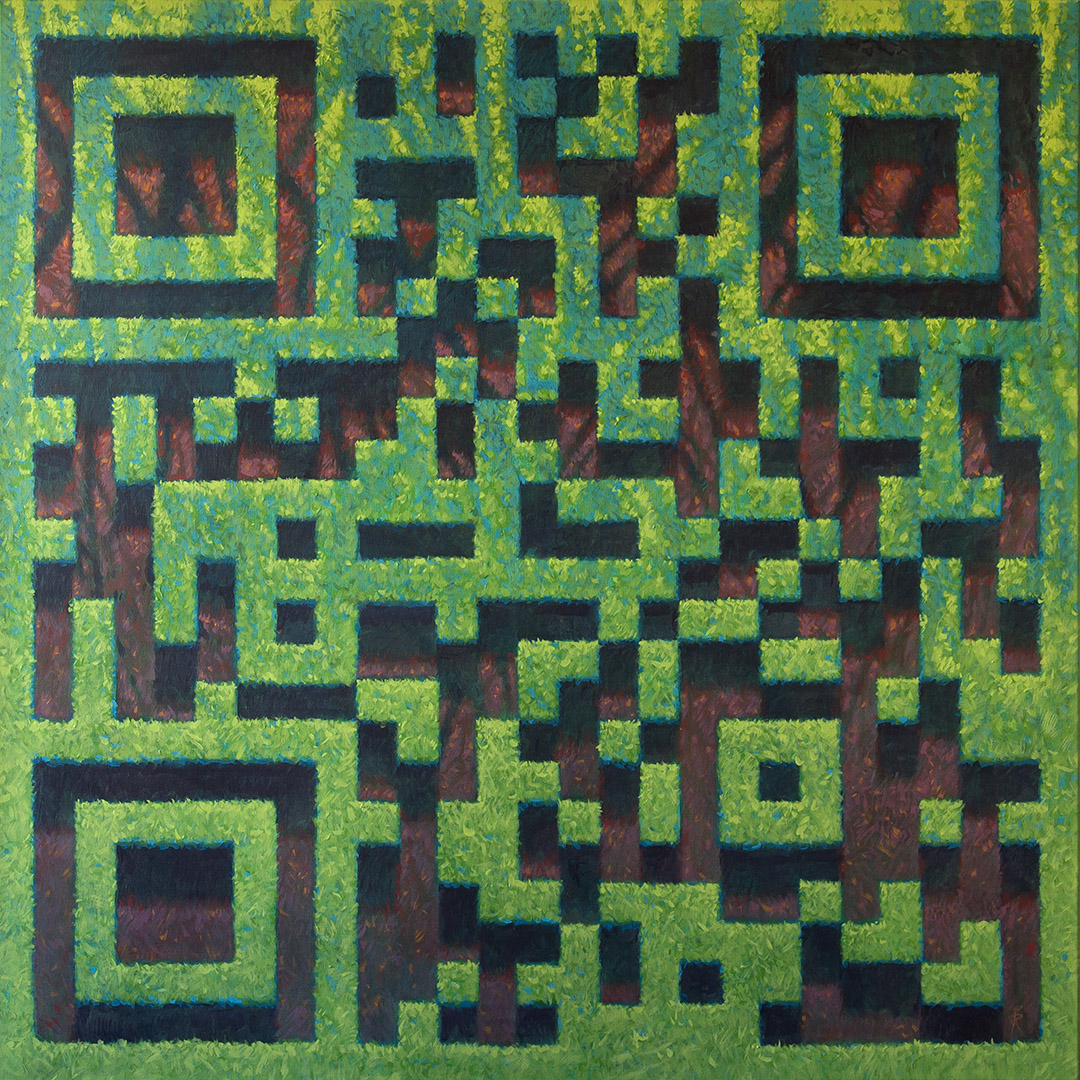
Among many other interpretations of labyrinth, general concepts that are perhaps the nearest to us are the ideas of the human way of life and the road to knowledge. Pattern alike bending path evokes the lifelong dance idea, reminding us of its turns, ups, and downs. Getting here, one can meet the terrible Minotaur, but may also become him. It is absolutely unknown, whether a way out can be found. What if these intertwinings actually are the one's abode? It is sad and wonderful at the same time, that everyone has one's own maze and monster, whom you have to overcome. There is no one except for the wanderer himself to make a route. Barcode resembling the Labyrinth is our own, this is where we err and triumph. And here we see its terrifying master, Minotaur. He's a symbol rather than a monster in literal sense. He is wretched, but still dangerous because of loneliness. He is a mirror. Needless to say, defeating an inner monster is the biggest difficulty. Unexpected infinite turns are only a way of perfection. Wouldn't we all like to believe in it? As is often the case, a helping hand for the daring one belongs to a beautiful companion. This is what a fairly concise central part, "Ariadne's Thread", describes. Our hero hasn't stepped yet on the knowledge path, so thread seems encouragingly long. But what's ahead... Well, people always hope for the best, so infinite discoveries, victories and love are certainly awaiting him.
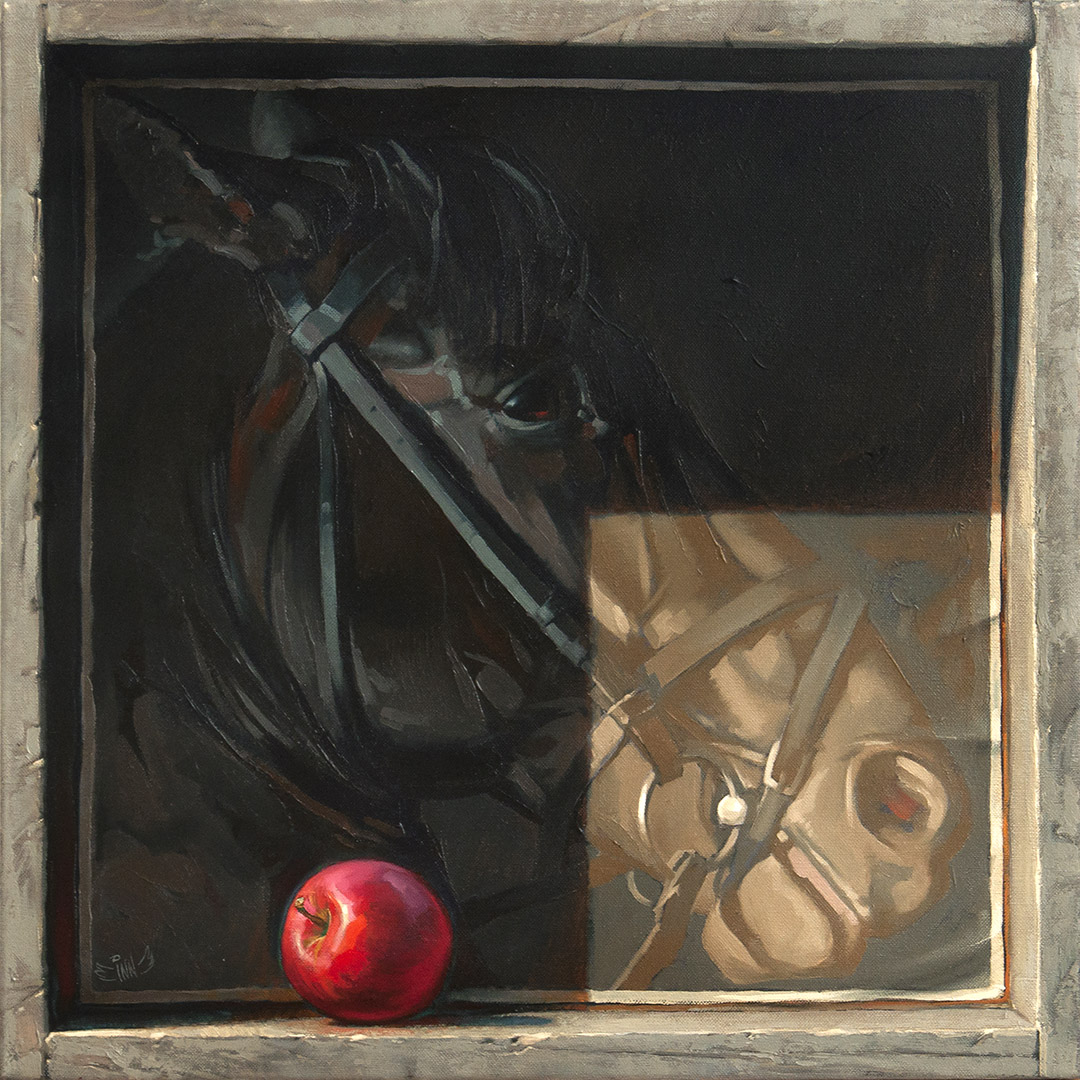
As white horse can never appear in the gloomy town, black horse, alive and filled with youth power, is nothing more than a picture, it won't touch the real apple. The upcoming sweetness visibility is just an illusion, like all the pleasures are vain. Is it only our consciousness, mistakenly enduing two horses with their desires? After all, white horse has no interest to real or painted houses any longer, and black horse is a picture that won't accept an invitation to a meal.
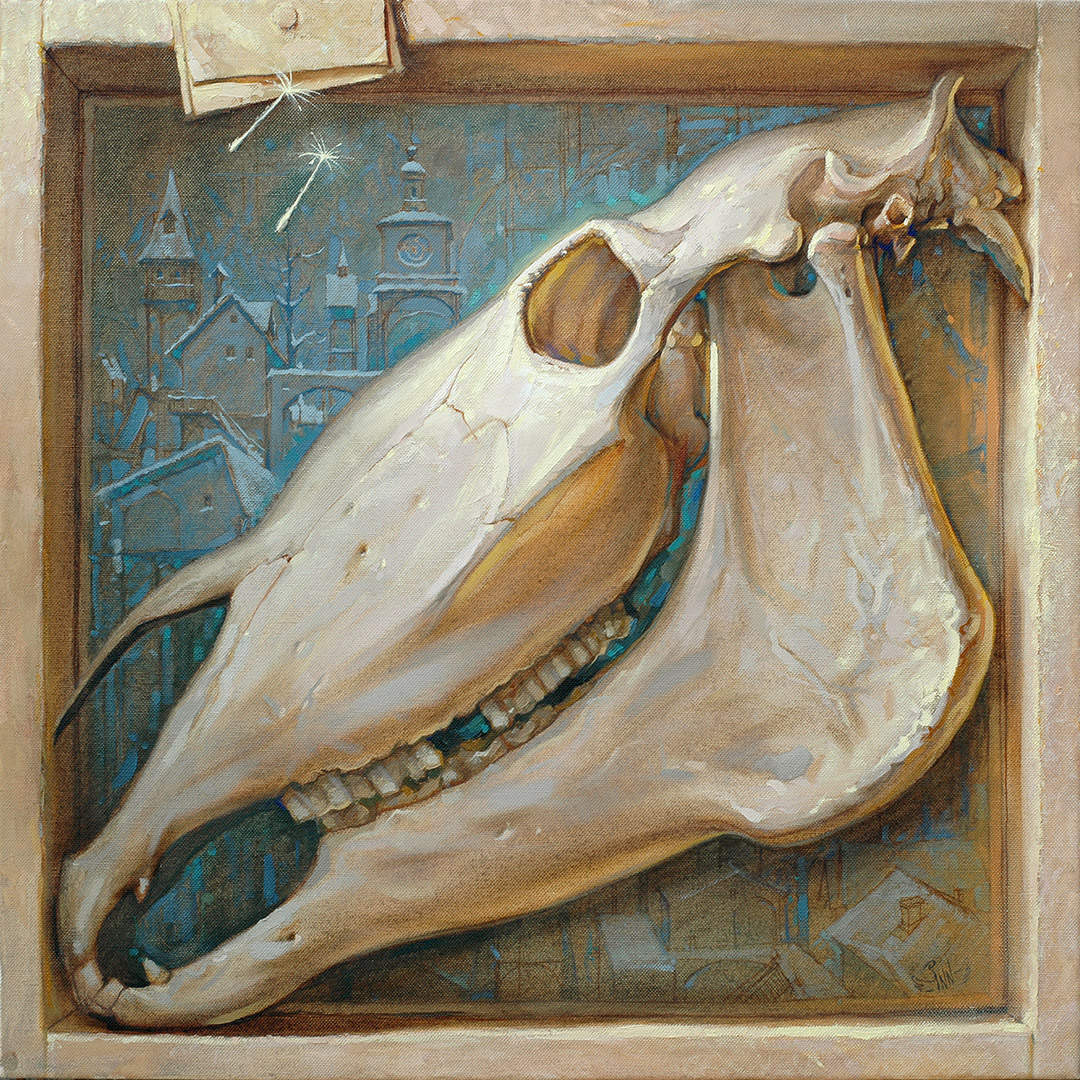
This picture, as well as its antipode in diptych, is intended to immerse spectator into a series of complex intricacies: life and death, dream and reality, true and imaginary. Horse skull, placed in center of composition, reminds human of existence evanescence, while not being a passive object of contemplation itself. Very real and tangible, the skull is placed on the painted town background. In contrast to the obvious death symbol the town itself acquires new features. On one hand, its fictitiousness oozes, which means only its imaginary accessibility; on other hand, in comparison to the lifeless frozen features, the windows lights look softer and seem to invite to warm up by the fire quicker. Two fragile dandelion fluffs, soaring above a cosy fiction and a grim reality, remind the viewer of his own life transiency.
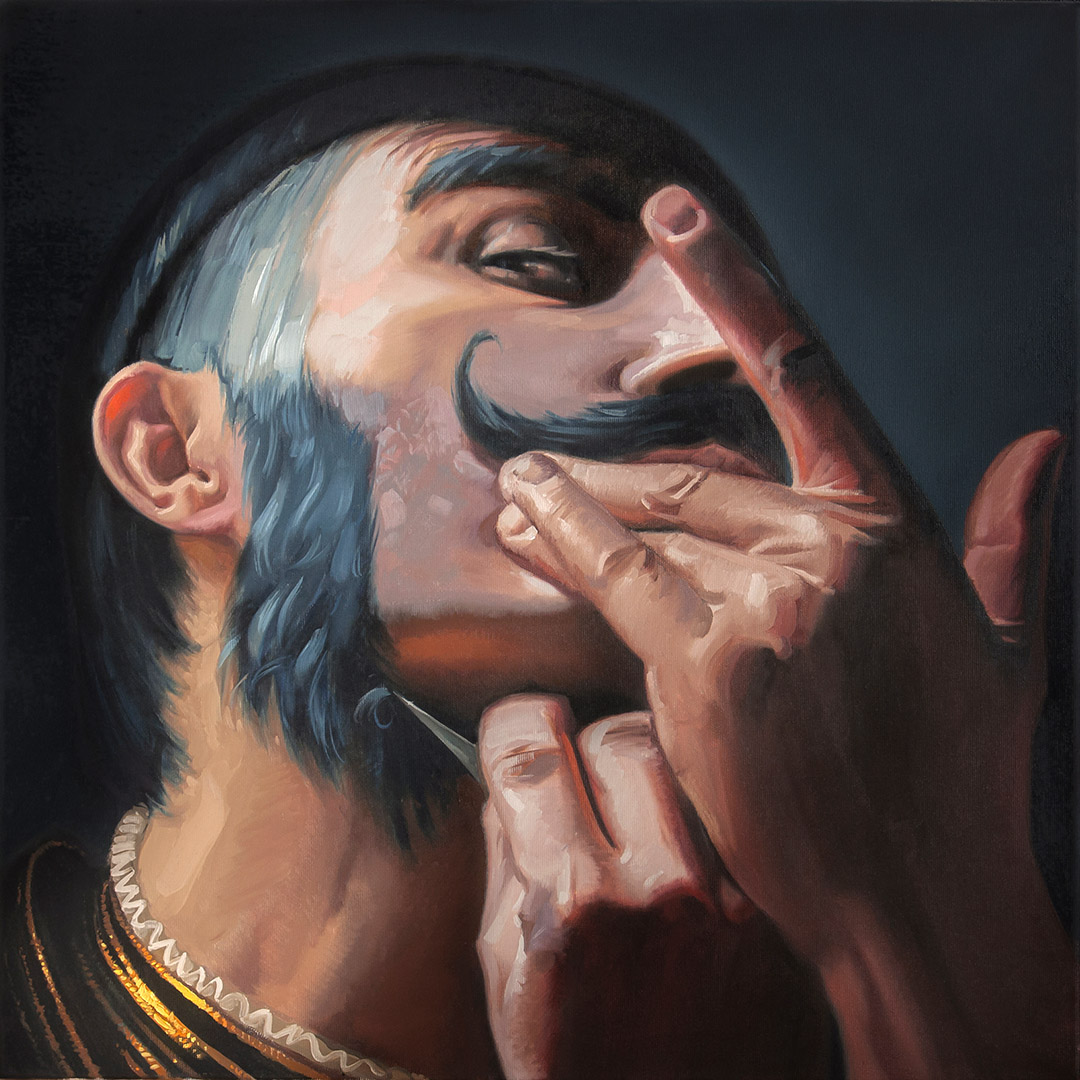
Due to the French folklore, skilfully interpreted by Charles Perrault, Bluebeard has a firm foothold in human mind as the insidious husband-assassin. The trouble is that this quite well-known fantasy has a real prototype, who probably never was a murderer. He was a marshal of France, a veteran of the Hundred Years' War and the companion of Joan of Arc, also known as Gilles de Rais. He was an offspring of aristocratic family; an excellently educated descendant of a noble Breton household. His life ended abruptly and tragically, when proceedings were instituted against marshal because of the rumours about his debauchery. His bitterest enemies were appointed as judges. Baron was tortured, and he confessed to an accusation. And he got incriminated nothing less than "a murder of 200 children" (according to other sources - around 800) and "some of his wives" (although he had only one). After his arrest a lot of children's skulls and bones allegedly were found in castle dungeons, but archaeologists disproved it. Legends and stories about him, which claim to be objective, are quite contradictory. They say he was a very well-educated and progressive man. In the dark time he was destroyed by his own beliefs and unruliness. We find one more detail decisive: half of de Rais' property was mortgaged to the church and in the case of his death the pledge could not be paid, and the church received all the mortgaged property.
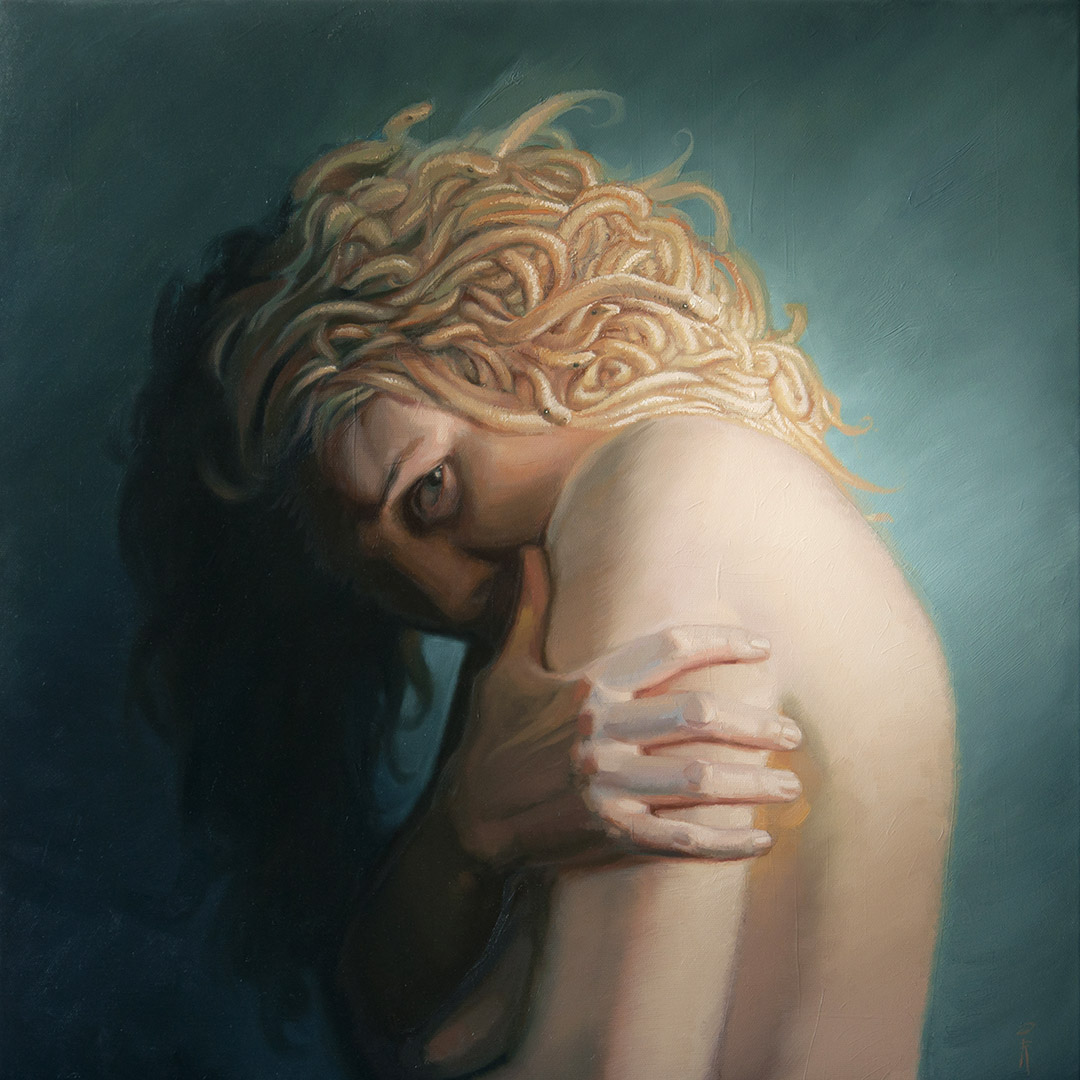
Protectress, mistress, guardess. Her image, despite the negative interpretation, is still popular and widely used by people. Yet in a positive, protective sense. And what about Medusa herself? What were her feelings? What was she thinking of or striving for? Was she happy about her dangerous gift? All variants of the myths about this woman keep this in secret. But the very fact that she was a woman leads us to think about her internal subtlety and, paradoxically, insecurity. She has loved and has been loved. And only then some heroes due to the orders of some kings... And she became the mother of the winged Pegasus, which is certainly to be remembered by poets and writers. Medusa has also born dangerous creatures, of course, but what do you expect from a furious woman? She had a reason. And we still want you to see above all - the helplessness and femininity of the protectress.
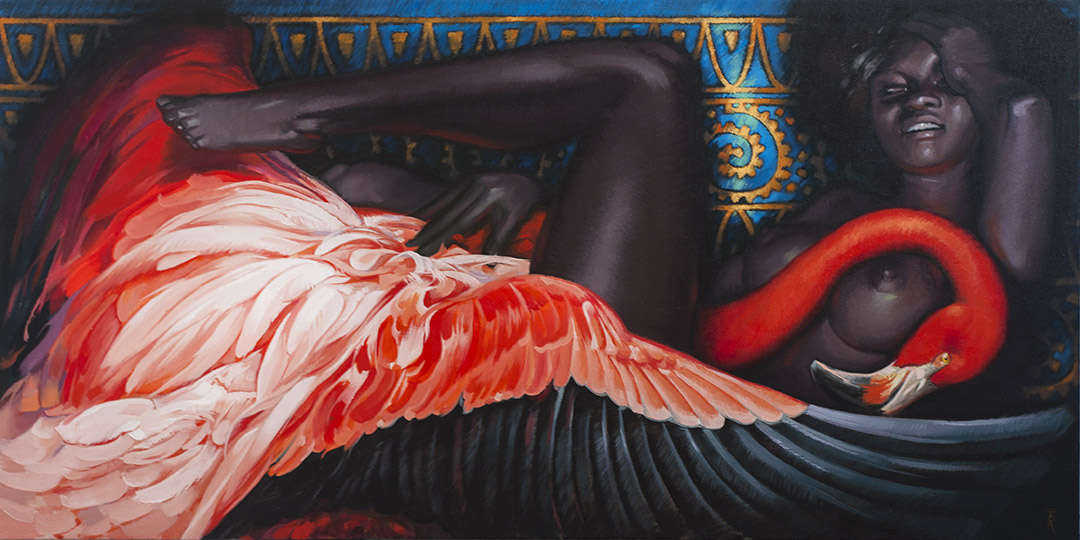
The character of Nemesis is quite ambiguous. While looking at plenty of controversial legends, you understand that all is about a girl with a difficult fate. Without willing to randomly select an option, which is closest to the truth, we have decided to interpret her image at ease, according to our own wishes. The black colour of her skin says: this is the daughter of Nyx, goddess of the night, an enigmatic temptress, who feels free under the cover of darkness. Why not a swan, but a flamingo? And who says, that things could have not happen somewhere in Africa?
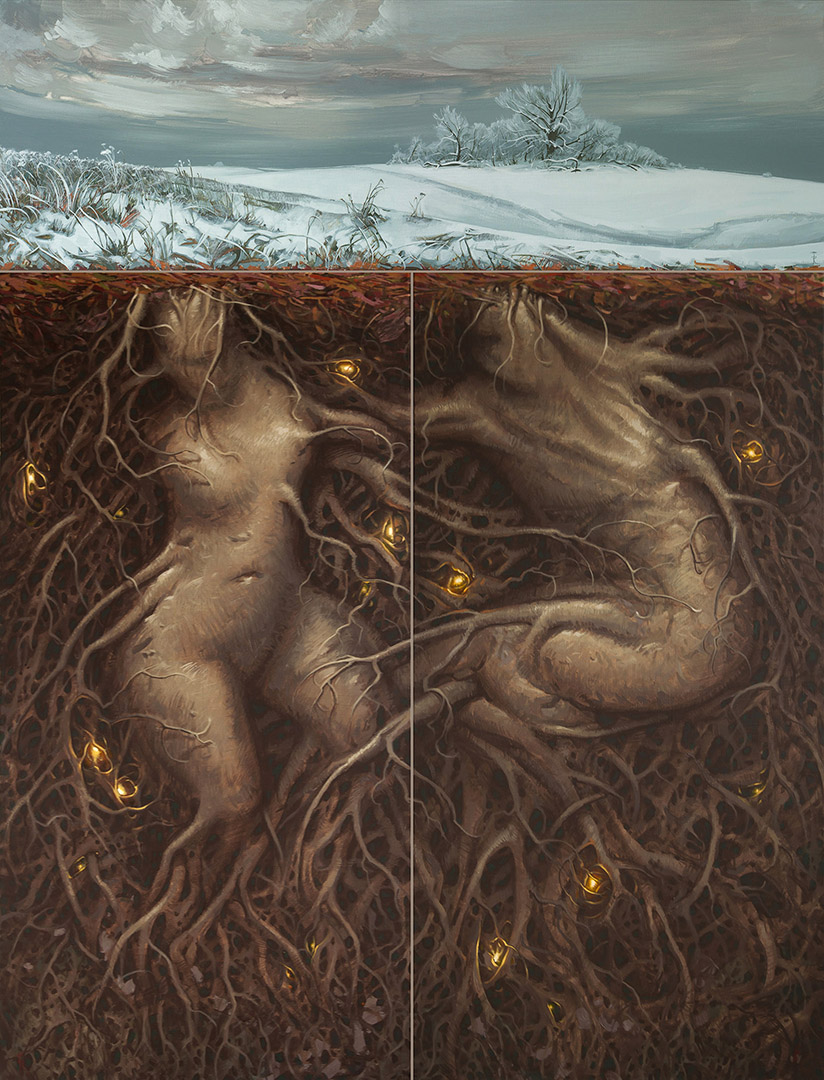
From the earliest times people knew the specific root, similar to the human body in shape. It was often used as a strong hallucinogen, also it was mentioned in the Middle Ages magical recipes. At those times the roots which matched the body shape as accurately as possible were the most valuable. According to one version, mandragora grows from the hanged man's semen. Therefore, it's not difficult to chance upon a magician or a witch, prowling in search of the magic ingredient at night under the gallows. When mandragora is pulled out of the ground, it screams with maddening sounds. To pull it out personally meant to meet demise, so one of the ways to obtain the plant would be to tie a dog to it and throw meat in front of the dog, so that it draws the root out. With mandragora people treated for infertility, attracted luck, looked for treasures and even flew, running the risk of being executed for witchcraft.
We thought it would be wrong to disconnect the male and female roots, so our Mandragora is the Conjoined Twins. Entwining its roots and leaves, this half-plant, half-essence will never be able to break the embrace. This is a harmonious unity of two essences and the frozen burthen of expectations. After all, whether at dawn, or at dusk, whether by the magician, or by a witch, Mandragora will be pulled out of ground and will cry its last song only once. This picture is central in our garden.